
Your Voice Matters: The Politics of Negotiations
Jun 2, 2025
story
Seeking
Visibility
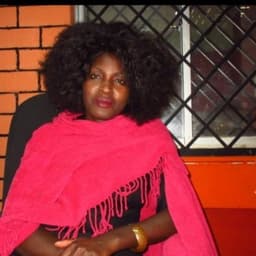
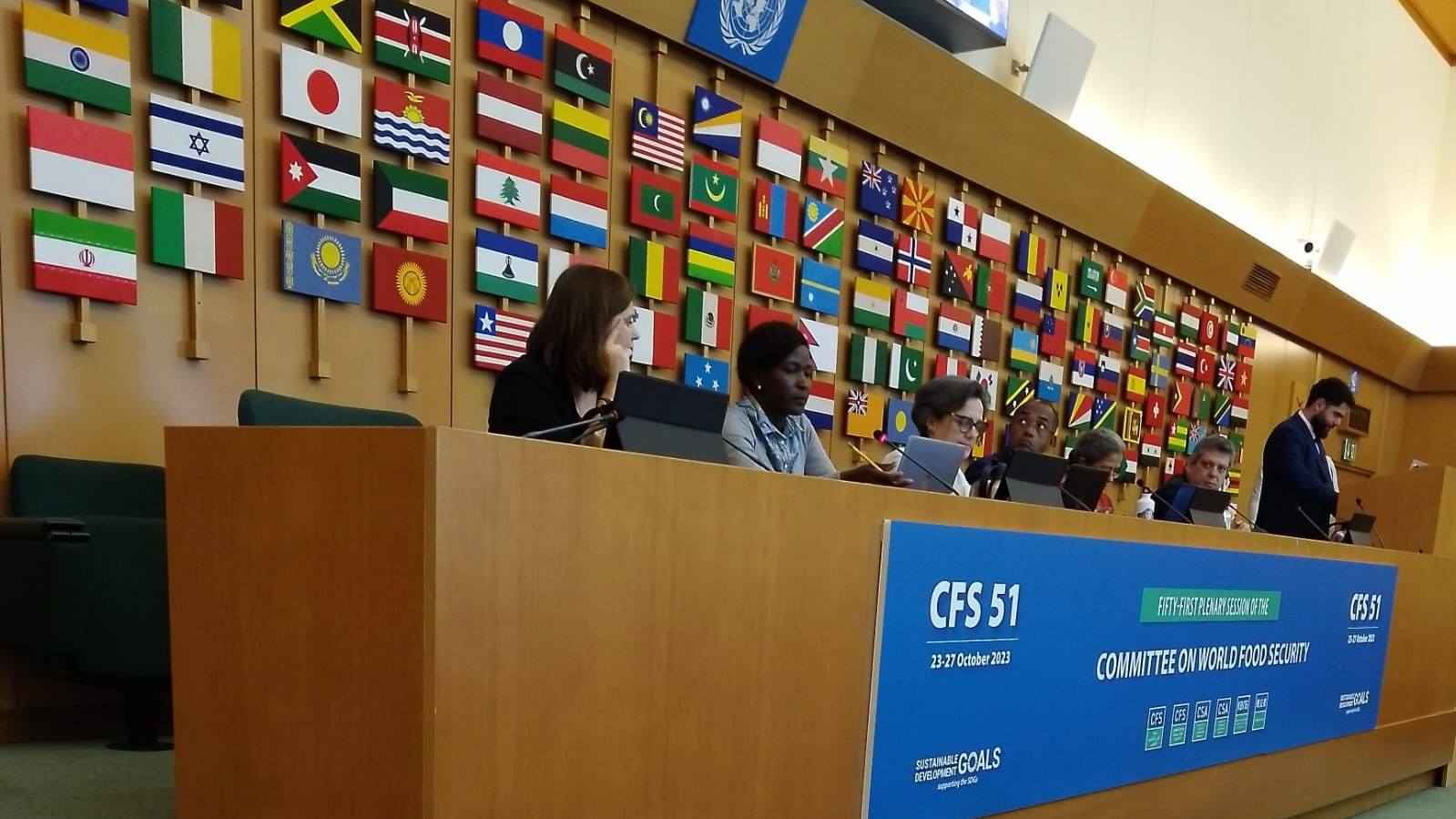
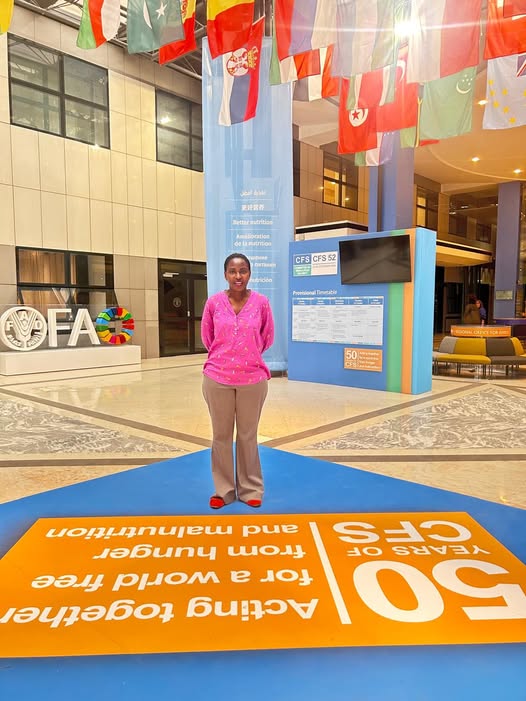
Photo Credit: @Betsy Diaz
Side Event at FAO
I never imagined myself engaging one day engaging in negotiations on a global scale. After all, my work was with smallholder farmers in my village in Siaya , Indigenous Peoples in Elgeiyo Marakwet and Baringo , the Endorois , Ogiek and the Sengwer to be specific , working with women network in Machakos , discussing food systems and why we need to transform to practices that contribute to ecological balance. I thought that was it , conduct the trainings, organising the dialogues ,monitor the implementation through farm visits and come again next year , with another groups of community members or shift to another locality.
Personally, although to many people this would seem routine, I made it my mantra to celebrate the little wins , advocacy work is not easy , particularly because change takes a long time to realised .When a farmer has utilised the knowledge gained and they are seeing change , I would celebrate, diversification by an indigenous community into growing food instead of over reliance on livestock , would be my mini celebration, the ability of rural based women to train others and transfer knowledge on how to make a carbon bed or how to use an A frame , would be a cause to celebrate, what of children who have successfully planted crops on their school garden and are now harvesting from the same patch ,would bring me joy. This is because of the fact that many rural communities are subjected to marginalisation and woe unto you , the farther your village is from the main road , the more marginalisation including lack of opportunities will be your daily experience.
Thanks to the power of networks ,Sophie Dowllar of the World March of Women introduced me to join the Civil Society and Indigenous Peoples Mechanism (CSIPM) that way you will be engaging in policy but also bringing to the fore the realities of the African continent. My initial engagement was mostly online , but I made it a point to speak about Africa , to always point out what was happening in my part of the world. At first, I was very confused , I could hear acronyms such as VGGT , outcome documents and policy products. With time I learnt the ropes , I understood diplomacy in practice. In negotiation rooms, one has the responsibility of shifting situation from mere statistics to voices and realities .You have to mention the villages experiencing conflict ,hunger and climate crisis by name even though you have never set foot there. Being African you are able to connect with the stories because it is our everyday reality. Climate change, hunger, flooding , forced migration , drought are not occurrences we read about in magazines on watch on TV ,we live it.
Sometimes during the negotiations, the realities of your continent , what you are carrying on your shoulders become swept under a carpet of deliberate ignorance, or are made to seem trivial. Some terms very dear the continent of Africa , to the millions of oppressed , terms such as patriarchy, intersectionality , multiple and intersecting forms of oppression may just seem as words but they carry a lot of weight. Take for example an African woman, widowed and with disability. She suffers economic oppression , limitations in movement and at the same time she is at an increased risk of losing her land because she is widowed and because the culture is patriarchal.
When you talk about women who have to compete with crocodiles to get water for example from Lake Baringo in Kenya to an audience which has tap water and who have the luxury of choosing whether to use cold or warm water from the same tap. When you talk about women and girls who have to walk longer distances because of drought and when they come back home the women are suspected of infidelity , it seems so unreal. Realities of children not going to school because a feeding programme has stopped or because of drought[1] or because they lack school fees to a world where education to university level is free for citizens are two parallel worlds.
It is quite sad that Africa is the richest continent in the world , yet the continent with the most troubles ,this boils down to leadership. When negotiations discuss conflict , African countries top the map, when discussions on food insecurity and global hunger emerge, African countries are on the list. Kenya for example list at position100 out of 127 countries according to the 2024 Global Hunger Index[2].When protracted conflict is being talked about , realities of fleeing women and children across African villages are told and retold. Come to the topic of climate change African countries most recently impacted include Kenya[3],South Sudan[4], Tanzania [5]and drought in Southern Africa[6]and sometimes the extreme weather events follow each other ,immediately after a drought season , communities experience flooding. Unfortunately , despite living in the richest continent ,frontline communities in Africa who include the fisherfolk , the Indigenous Peoples , marine ecosystem communities who depend on oceans to survive both in terms of food and sources of livelihoods, to the stallholder farmers who feed nations ,continue to suffer climate related extreme events .Of the women who are forced into transactional sex because the fish stocks have reduced , thanks to climate change ( when water gets too hot the fish have to migrate to cooler waters, the fishermen migrate too ), and women fishmongers because many cultures in Africa do not allow women to fish because they’re labelled ‘moody or unclean because they menstruate , and this will drive the fish away .Women are thus forced into transactional sex not to get fish for free but for the assurance of access to fish. This has implications for HIV infections and family breakages particularly in beach communities across Africa. Of the villages that purchase agrochemicals which have been banned in Europe and other continents but still find their way into Africa ?[7] .Are African people children of a lesser god? Why is it that what comes to Africa does not go through so much scrutiny?.
Many at times it is difficult to access negotiation spaces particularly for people from Africa .The transport costs including flights , visa application processes , accommodation and other related expenses make it difficult .In negotiations you have to read and keep alert, sometimes sleep becomes elusive, other times your body and spirit becomes so tired that you can’t take it anymore. What of time differences , this is another element that sucks your body, leaving you exhausted. So, if you are lucky to get the chance to be part of a negotiator delegation or to be a speaker in a forum , speak because Your Voice Matters! do it for Mama Africa. There is power in telling your story, in talking about your realities. During negotiations , things may not always go the way one anticipates , but you have to keep pushing
References
[1] https://reliefweb.int/report/kenya/biting-hunger-drives-children-out-schoo
[2] https://www.globalhungerindex.org/
[3] https://www.ifaw.org/international/journal/catastrophic-impact-kenya-floods-communities-animals
[4] https://www.doctorswithoutborders.org/latest/life-levee-extreme-flooding-south-suda
[5] https://www.theeastafrican.co.ke/tea/sustainability/climate/tanzania-battles-floods-as-roads-farms-damaged-4999668
[6] https://www.unocha.org/publications/report/mozambique/southern-africa-el-nino-regional-humanitarian-overview-september-2024
[7] https://ke.boell.org/en/2023/01/13/imports-and-exports-banned-sold-anyway#:~:text=A%20total%20of%20230%20active%20ingredients%20are,atrazine%20(Syngenta)%2C%20trichlorfon%20(Bayer)%20and%20fipronil%20(BASF).&text=Despite%20being%20banned%20in%20the%20EU%2C%20Kenyan,acetochlorines%20from%20Belgium%20and%201%2C3%2Ddichloropropene%20from%20Spain.
- Girl Power
- Human Rights
- Food Security
- Global