
ZIMBABWE: Navigating the Digital Divide
Jul 30, 2021
story


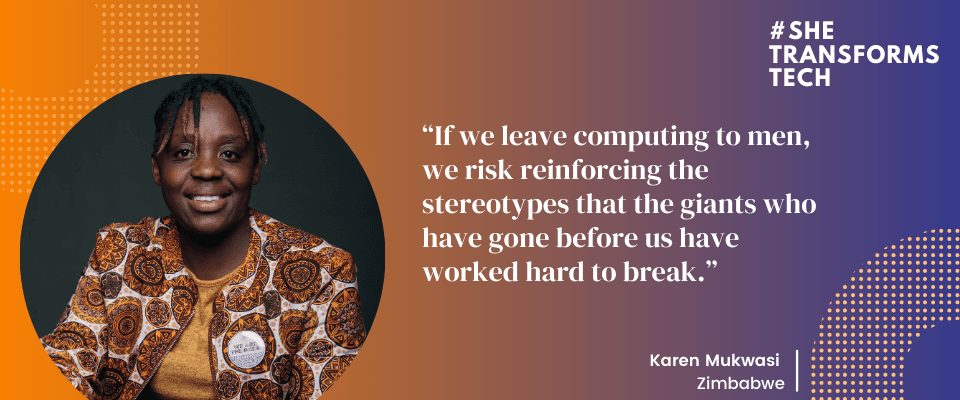
As a young graduate, Karen couldn’t land a job in the male-dominated tech field. Now, she’s training the next generation of women developers to transform the industry.
If we leave computing to men, we risk reinforcing the stereotypes that the giants who have gone before us have worked hard to break.
As a young graduate, I knocked on doors in the computing world with ambitious excitement. None opened for me. Employers pointed me to receptionist or clerical positions, but I applied my skills and time to a space that embraced me: a women’s media company. It never occurred to me to keep trying to find a place for myself in the tech world.
Now I realize the need to fight the technology gender gap. It’s not just about broadening access to tech jobs but addressing a deeper gendered digital divide: women are often excluded from tech, and tech is often used to harass and abuse women.
We’re in a different era from the early 2000s when I qualified as a software developer. In the end, I had to leave Zimbabwe for an entry-level job as an ICT trainer. Working in Botswana, I was the only female in my department–all my bosses were middle-aged and male.
When I moved back home, homesick and disillusioned, I found my place in women’s rights work. I noticed that many women lacked access to information channels and I heard conversations about the gender technology gap. My training, previous experience, and background in women’s rights sparked an idea for a platform. In 2018, I founded the PADA Platform, my digital literacy initiative in Harare, Zimbabwe.
I wanted to see more young women break into the tech industry. Women couldn’t stop the fourth industrial revolution from coming, but they could gain skills to participate fully. Teaching young girls computer skills and encouraging them to train for tech careers is a feminist issue. It’s about voice, creating space for young women, and fighting for women’s rights in this digital landscape.
Pada is the Shona name for the game hopscotch. The game takes many Zimbabwean women back to the dusty streets of their youth, to the games that afforded them their first dose of sisterhood. We set out to ensure the platform would impart skills and provide safe spaces to be creative and express themselves. At the PADA platform, we want young women to understand the technology gender gap results from patriarchal models and women’s systematic exclusion. We also want them to know that if we leave computing to men, we risk reinforcing the stereotypes that the giants who have gone before us have worked hard to break.
There is skepticism and even opposition when you start a conversation about creating a digital literacy and coding initiative for girls from marginalized communities in Harare. Technology is hardly regarded as a critical issue for these girls, many of whom miss school because they lack access to feminine hygiene products. Coding training sounds frivolous when not adequately contextualized in the hierarchy of needs for African girls from marginalized communities. But the Covid-19 crisis has provided us with an opportunity to contextualize digital skill building. We woke up one day and the internet was the center of all our educational and professional activities. We can’t allow poverty and marginalization to keep us at the fringes. When a crisis hits, we will suffer harder blows.
At PADA, we know that we need need women developers in all areas—including the gaming and entertainment industries. For research, PADA visits public spaces where young people access technology-related services. These visits took us to a gaming den at a shopping center. The place was dark and filled with violent sounds–a whole world without women represented.
In early 2019, the release of the graphic game “Rape Day” caused shock and public outrage. While its platform pulled the game, it was a painful reminder of how we’ve left the world of computing to developers with minimal regard for women.
At PADA, we envisage a world where female game developers and gaming champions bring their cultural experiences and dynamics to the industry. Women can lead an entire revolution, bring their games to the world of technology, and develop gaming characters that resonate with how women want to be represented.
It is time to raise a generation of women who will strategically fill the existing gap by taking up space in every industry that the tech world presents. We need tech solutions that respond to our needs as women and entertainment that represents and respects us.
The first step is to ensure that we do not leave computing and technology to men. Not at any level! It’s Time we take up space and bring the revolution to the tech field.
This story was published as part of World Pulse's shetransformstech Campaign and is included in the #shetransformstech final report. Download the report to find out what grassroots women and gender-diverse individuals from 60+ countries say individuals, policymakers, and tech companies must do to make tech equitable for all.
- She Transforms Tech
- Africa